


Contents
- What is the difference between lye and therapeutic mud?
- What are the therapeutic properties of lye?
- How long have people known about lye?
- How are ANCHIALO products made?
- What does stabilised lye help with?
- How do you make a lye compress?
- What is the difference between the oils and the gels?
- Toothpaste with 35% lye — made to the original recipe
- Body mask with lye and mud
- Watch the full interview
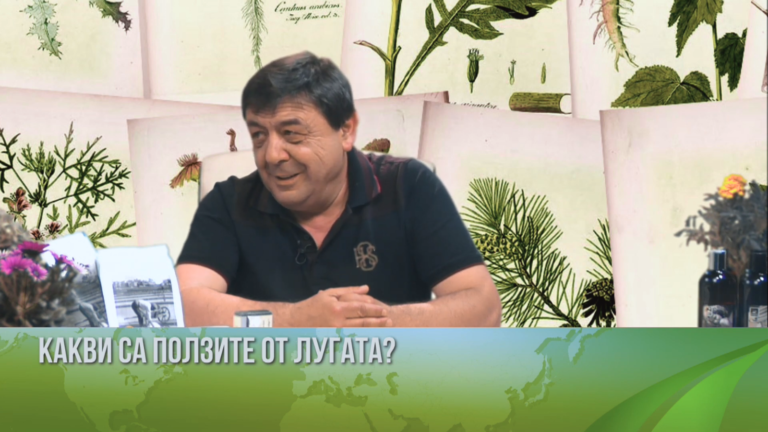
A conversation with Grudimir Grudev, owner and manager of AZIMUTH 6000 Ltd — the manufacturer of the ANCHIALO products with Black Sea lye and mud. The interview is conducted by the singer Sandra Petrova for the programme “Across Bulgaria with TV Bulgare”, filmed on 12 August 2020 for the channel’s film about Pomorie.
In brief
- Lye is what remains after salt production — medicinal lye is pumped out for only 20–25 days a year.
- After filtration and stabilisation it retains its properties for 2–3 years.
- The magnesium salts it contains are absorbed better through the skin than as tablets.
- Lye compress: twice a day, for at least 7 days, 40–50 minutes at a time.
- The toothpaste contains 35% lye — made to the original recipe.
What is the difference between lye and therapeutic mud?
“Lye is a residual product of salt production by the classic method — through the evaporation of sea water,” Grudev explains. The technology is very old: sea water enters the lake, from there it flows into smaller basins known as “pans”, and finally into the salt pan itself, where it thickens completely.
Sodium chloride — table salt — crystallises first and settles on the bottom. All the remaining salts, above all the magnesium salts and sulphates, stay above the salt layer. This is lye. In order to collect the salt, the lye is pumped into other basins. “We use this ‘residual product’ to make cosmetic products.”

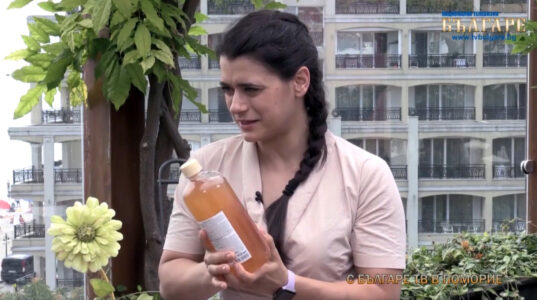
A still from the interview for TV Bulgare
What are the therapeutic properties of lye?
“What helps is the high content of magnesium salts — above all magnesium chloride and magnesium sulphate, which begin to run short in the body especially after the age of 30–35, when their levels are harder to restore.”
The magnesium salts in lye are absorbed best transdermally — through the skin. “I wouldn’t say 100%, but absorption really is greater than with tablets.”
How long have people known about lye?
“For a very long time — more than 2,000 years, ever since salt production began in Pomorie.” The town’s old name is Anchialos — hence the name of the brand. Why ANCHIALO?
How are ANCHIALO products made?
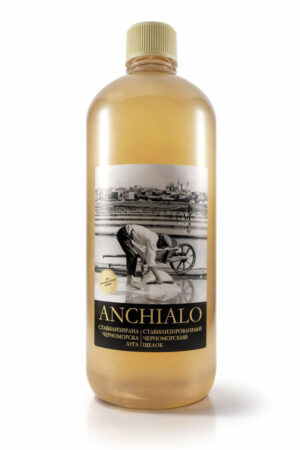
“The window for extracting medicinal lye is only 20–25 days a year.” The lye is bought from the concession holder, which operates both the Pomorie and the Burgas salt pans. Then comes the longer process of filtration and stabilisation — to make it safe for cosmetics and to preserve its qualities for at least 2–3 years. All the other products are made on the basis of this stabilised lye.
Ideas often come from the market, and the aim is simple: “We try to make the treatments carried out in the sanatoriums in Pomorie available to far more people at home. Not everyone can afford 15 days in a sanatorium.”
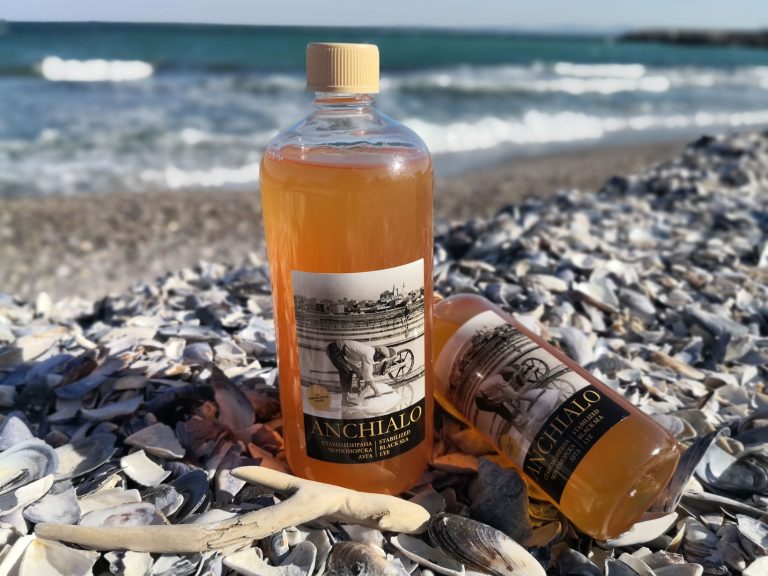
ANCHIALO stabilised Black Sea lye
What does stabilised lye help with?
“Above all with bone and joint conditions — arthritis, osteoarthritis, coxarthrosis. Also for recovery after fractures and injuries, sports injuries and postural problems caused by work.”
How do you make a lye compress?
- Soak a flannel (cotton) cloth in lye and wring it out.
- Place it on the affected area; cover it with plastic or cling film so that it stays in place.
- Keep the compress on for about 40–50 minutes — you don’t need to stay still.
- Do this twice a day, for at least 7 days.
Detailed instructions can be found in the article “The benefits of Pomorie lye and how to use it”.
What is the difference between the oils and the gels?
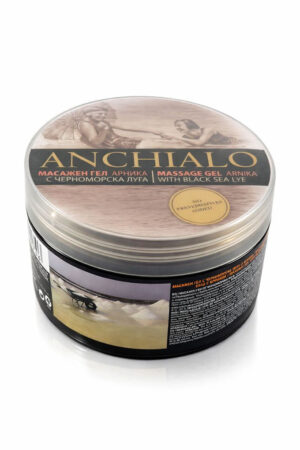
“The oils and the gels are similar in composition. The gels simply have a higher viscosity and the oils a lower one. Some therapists are used to a more fluid consistency, others to a thicker one — it’s a matter of personal preference.” They are enriched with Bulgarian extracts of arnica, lavender, juniper and rosemary — see which herb does what.
A quick treatment for busy people
Rub the oil or gel into the problem area with massage movements, wrap it in plastic and carry on with your day — while working at the computer, for example.

ANCHIALO massage oils and gels
Toothpaste with 35% lye — made to the original recipe
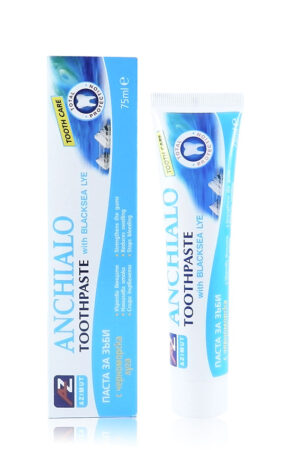
“We have two very interesting oral hygiene products — a mouthwash and a toothpaste with lye. For the toothpaste we have revived the old technology of the former ‘Pomorin’ and we really do use 35% Black Sea lye, just as it was back then.”
Some people may find the taste unusual, but the toothpaste helps above all to firm the gums, with bleeding gums and mild periodontal disease. The mouthwash — a 10% Black Sea lye solution — serves the same purpose. See the oral hygiene products.
Body mask with lye and mud
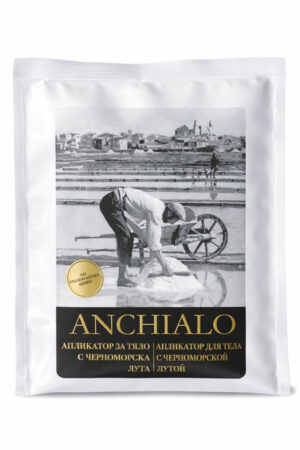
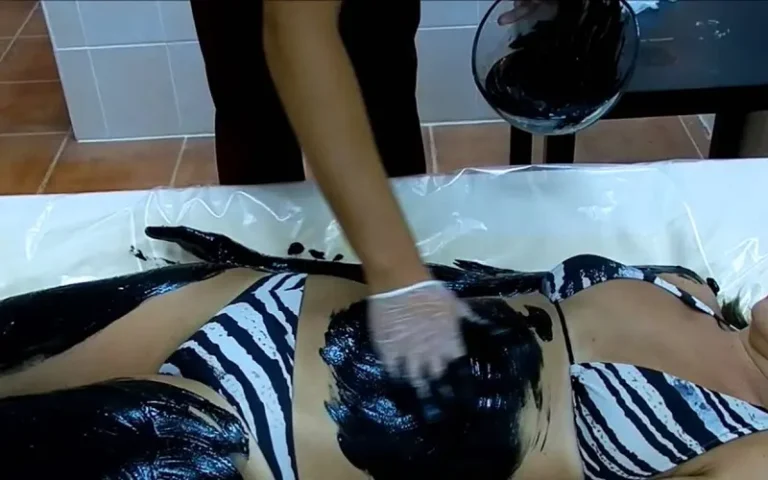
“The product combines Black Sea lye and liman mud. It has a therapeutic and cleansing effect, and the skin becomes smooth and soft.” The active ingredients are the trace elements in the lye and the mud — and the mask can be used not only in a sanatorium, but at home as well.
Watch the full interview
See also the interview with Grudimir Grudev for “The Miracle of Health” (2022).


About Luga.bg
Maker of natural products with Black Sea lye and liman mud from Pomorie. We have been writing about lye, mud and sea minerals since 2015 — with doctors, physiotherapists and our own experience.