
Contents
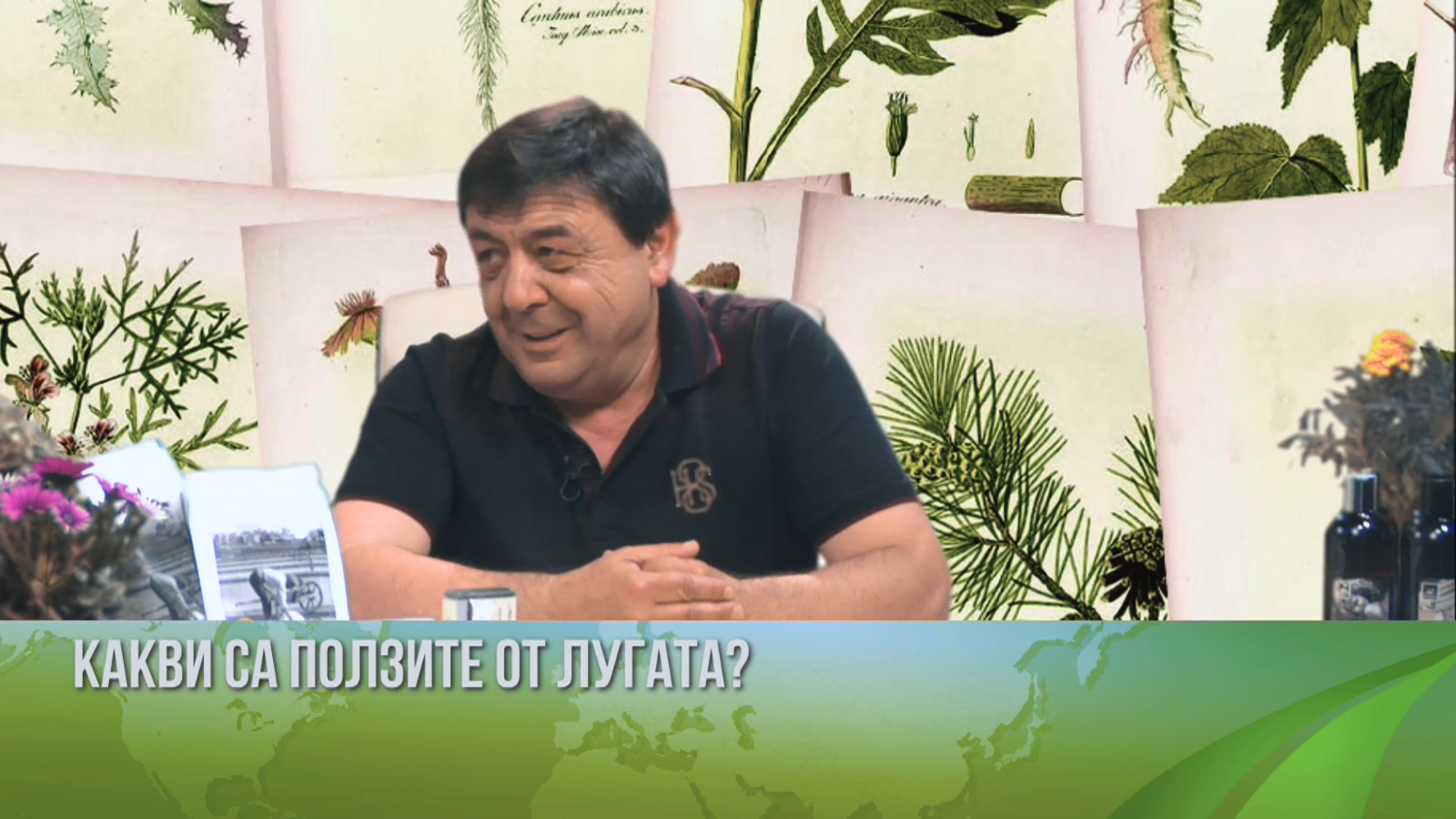
Grudimir Grudev, owner and manager of AZIMUTH 6000 Ltd, is the first guest on Karmen Lazarova’s programme “The Miracle of Health” on Bulgaria 24 television. The conversation was filmed in May 2022 and is devoted to Black Sea lye — what it is, how it is obtained and how products made with it bring sanatorium treatments into your home.
In brief
- Lye remains in the salt pans near Pomorie and Burgas after the sea salt has crystallised — it is a complex of magnesium salts, chiefly magnesium chloride and magnesium sulphate.
- It is harvested once a year, between roughly 25 August and 10 September, after which it is filtered and stabilised so that it lasts until the next harvest.
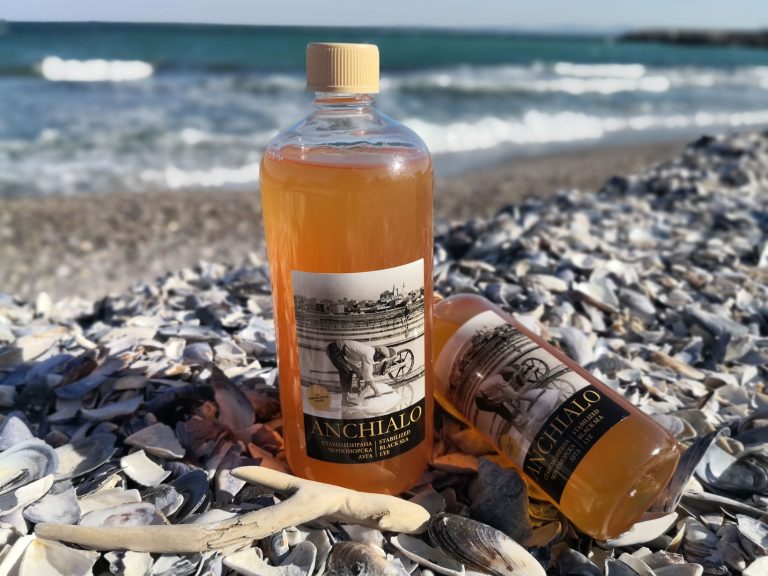
- The idea behind ANCHIALO products is that sanatorium treatments can be carried out at home.
- The range at the time: pure lye, massage gels and oils, mouthwash and toothpaste with 35% lye, a body applicator, soaps, shower gel and a serum with hyaluronic acid.
Watch the interview
The recording runs for about 14 minutes — the full conversation with Grudimir Grudev.
What is lye and where does it come from?
Lye has been known in Bulgaria for more than 200 years. It is produced wherever table salt is made the traditional way — by evaporating sea water.
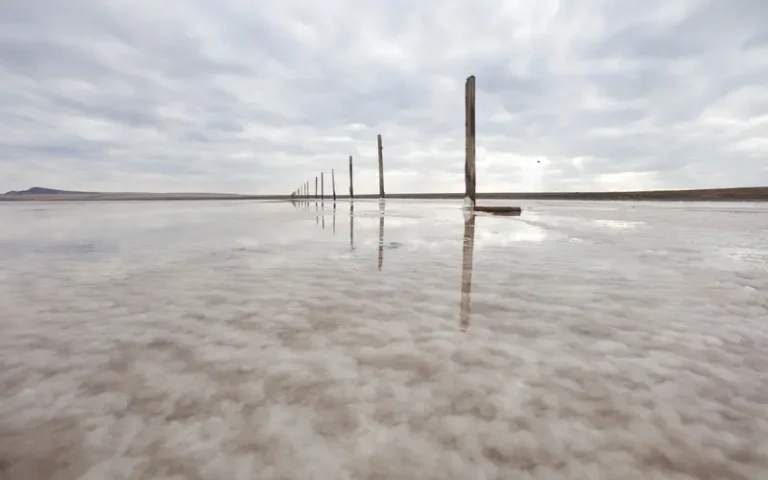
- Sea water seeps into the liman lakes around Pomorie and Burgas, where the sun concentrates it.
- It is then channelled into smaller artificial basins — the so-called “pans” — where evaporation continues.
- Once it reaches the required density, the water passes into the salt pan itself. There, sodium chloride — table salt — crystallises first and forms a layer of about 10–12 cm on the bottom.
- The liquid that remains above the salt layer is the lye.
“Lye in itself is a complex of magnesium salts — chiefly magnesium chloride and magnesium sulphate,” Grudev explains. For salt producers it is a residual product: they pump it out in order to reach the salt. For AZIMUTH 6000, however, it is the raw material.
When is lye harvested?
Lye is available once a year — in the period from around 25 August to 10 September, when it has “ripened”. That is when the company buys up the available quantity and begins the longer process of treatment: filtering and stabilising. This allows the lye to be used throughout the following year until the new harvest. More about stabilising lye.
Why are magnesium salts important?
According to Grudev, with age — after 35 to 40 — the body increasingly lacks magnesium. Many people take magnesium tablets, whereas lye offers a natural Bulgarian source of magnesium salts that are applied to the skin. He adds that, in his words, only 3 or 4 places in the world still have lye, which is why he calls it a “national treasure”.
The sanatorium — at home
“The idea behind these products is to bring the sanatorium home,” says Grudev. Not everyone can afford — financially, or above all in terms of time — to spend 7 to 10 days at a sanatorium once or twice a year. The treatments carried out there can also be done at home.
Which lye products did he present?
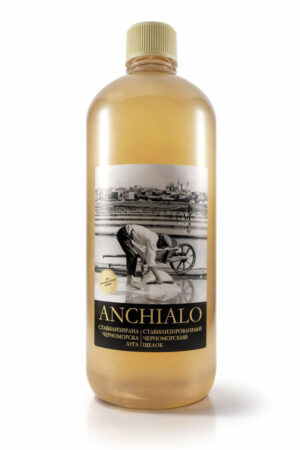
- Black Sea lye — in its pure form, with no additives.
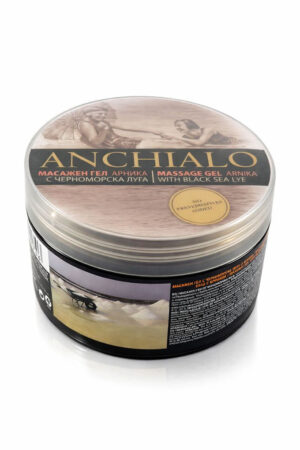
- Massage gels and massage oils — at the time in five varieties, in which lye makes up over 95% of the product: a standard version and ones with lavender, juniper, rosemary and arnica.
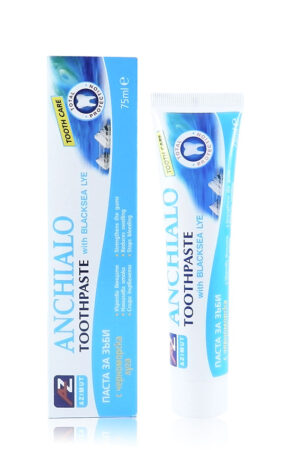
- Mouthwash and toothpaste — the toothpaste contains 35% lye. Karmen Lazarova says she uses the toothpaste and that it firms up the gums and removes bad breath. “It doesn’t replace the dentist, but it helps,” both agree. See also the recipe for the toothpaste with 35% lye.
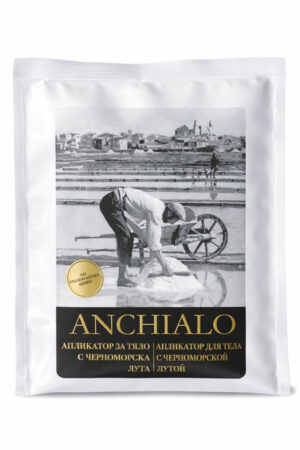
- Body applicator — a cotton cloth measuring 60 × 30 cm, soaked in lye, for rubs and applications on problem areas.
- Soaps — brand new at the time: with Black Sea lye, and with lye and liman mud.
- Shower gel — with about 10% Black Sea lye.
- Serum with hyaluronic acid — for hydrating the skin in summer and for facial beauty treatments all year round.
Lye or mud?
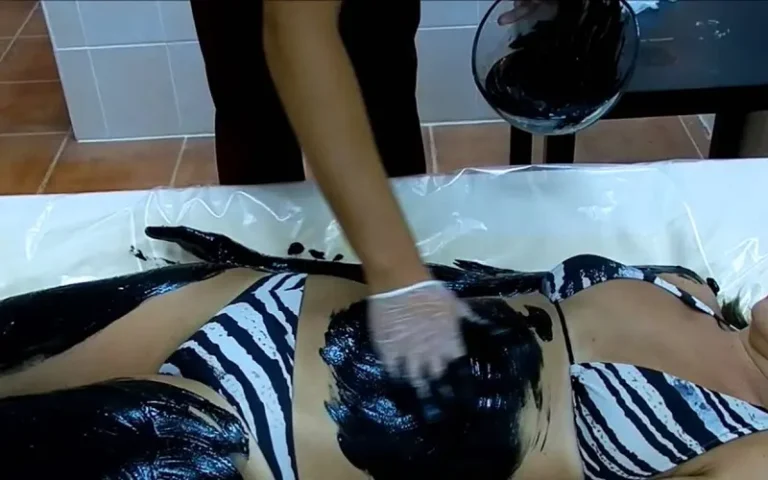
Asked whether liman mud contains lye, Grudev replies that it does — and in sufficient quantity. But the best results, in his view, come from combining lye and liman mud. What the doctor says about mud and lye.
Read more
- Grudimir Grudev’s interview for Bulgare TV — where the lye comes from, how it is stabilised and how to make a compress.
- Why ANCHIALO? — the story behind the brand name.
- The benefits of Pomorie lye and how to apply it.


About Luga.bg
Maker of natural products with Black Sea lye and liman mud from Pomorie. We have been writing about lye, mud and sea minerals since 2015 — with doctors, physiotherapists and our own experience.